


Mechanisms of Tumor Cell Migration
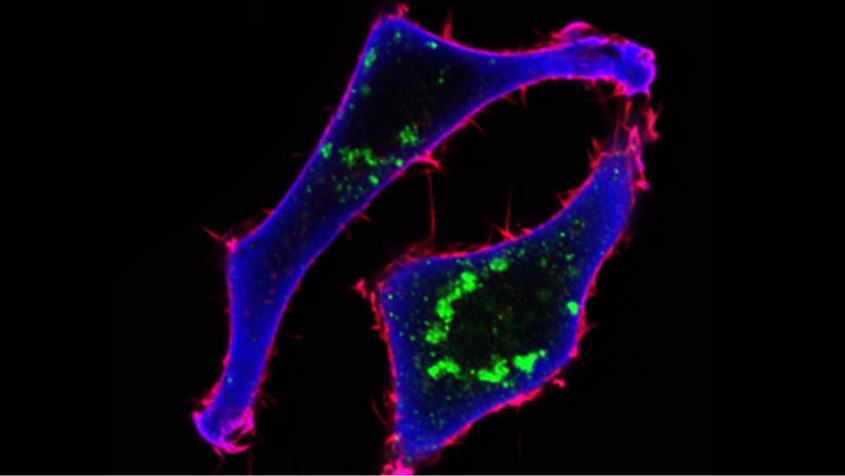
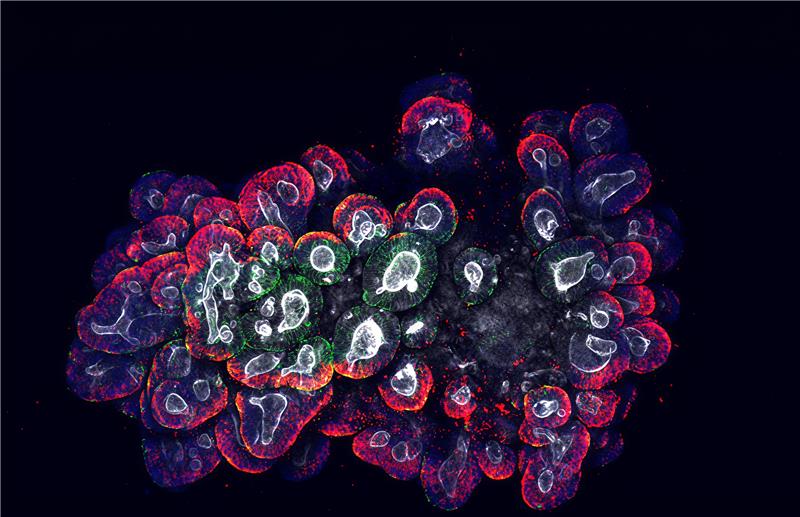
We study how mechanical stress and tissue fluidification govern the earliest steps of tumor evolution, enabling collective migration and early dissemination. We uncover how mechanical forces trigger nuclear and mitochondrial DNA release, activating innate immunity and shaping tumor–immune interactions.
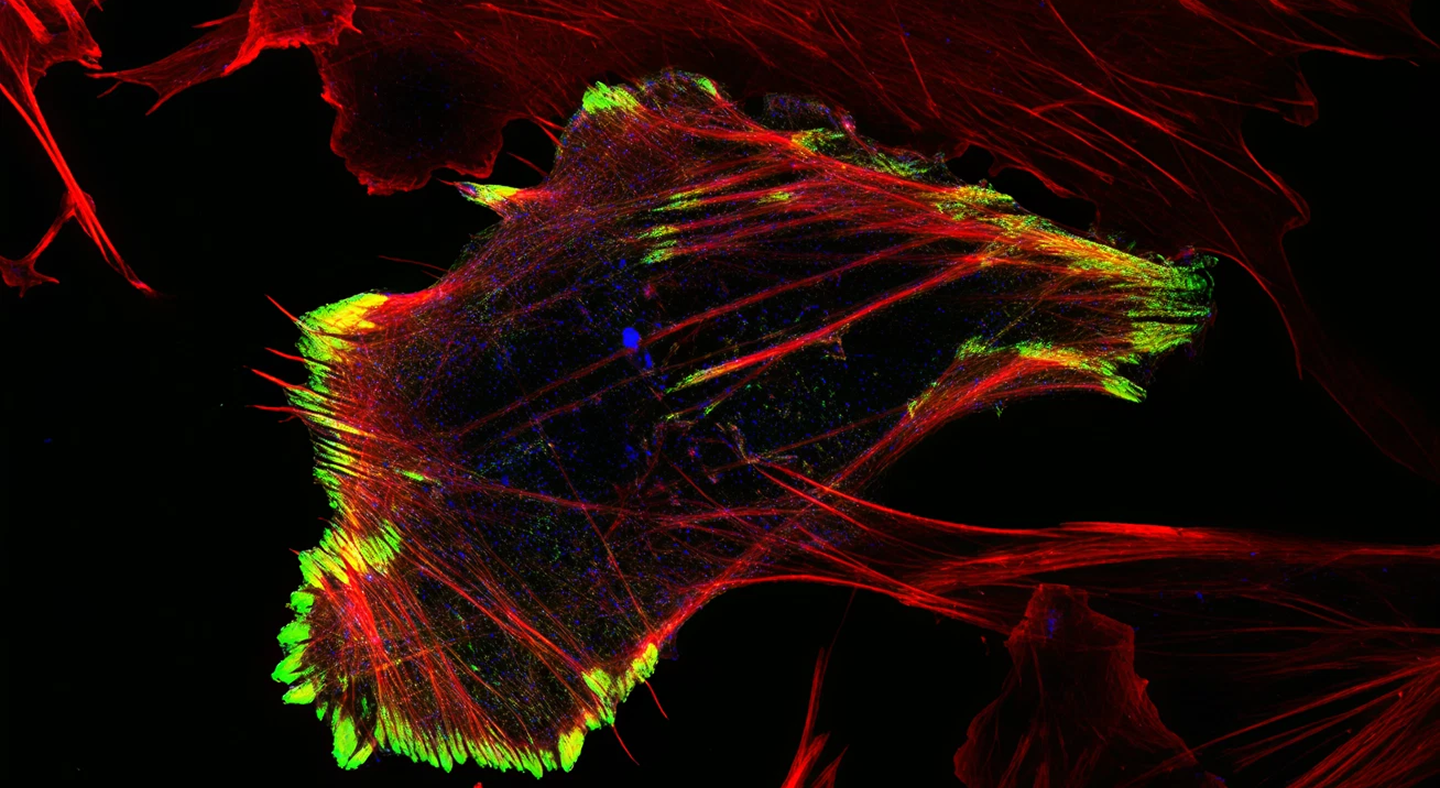
We define how fluid-like collective motion can induce reversible dormancy, impacting relapse and metastatic awakening. We reveal molecular regulators — from RAB5A to IRSp53 and connexins — that control solid-to-fluid transitions and represent potential therapeutic targets
1/3 -
To achieve these goals, we combine live imaging, advanced biomechanical measurements and molecular profiling. Our ultimate aim is to deliver mechanical and molecular biomarkers capable of predicting which early lesions will progress to invasion.
These biomarkers could transform clinical decision-making, enabling early therapeutic intervention and preventing cancer spread before it begins.
Project 1
Mechanical Stress, Tissue Fluidity, and Immune Activation
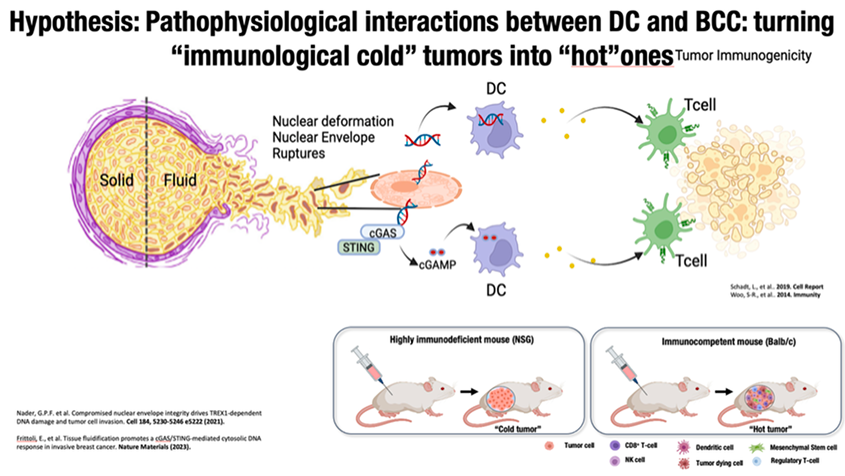
We investigate how mechanical stress and tissue fluidization shape the early steps of tumor progression. When epithelial cancer cells shift from a rigid, solid-like arrangement to a more fluid and deformable state, they gain the ability to move collectively and infiltrate surrounding tissues. However, this same stressed and fluidized state can also generate cell-intrinsic danger signals that activate the innate immune system.
This project explores this double-edged role of tissue fluidity:
promoting local invasion while simultaneously
triggering immune surveillance pathways that may limit further dissemination.
By understanding how mechanical forces, metabolic stress, and immune signaling intersect, we aim to identify ways to leverage the inflammatory response to restrain tumor progression. This work provides a foundation for new therapeutic strategies that both impede early invasion and enhance antitumor immunity.
Relevant publications:
- Mitochondria DNA release in mechanical stressed fluidized mammary tumors unleashes anti-tumor immunity. Submitted 2025
- Tissue fluidification promotes a cGAS-STING cytosolic DNA response in invasive breast cancer. Nat Mater 22, 644-655 (2023).
Project 2
Tissue Fluidity, Collective Motion, and Tumor Dormancy
Project 3
Molecular Control of Tissue Wetting and Solid-to-Fluid Transistion: Beyond RAB5A
Project 4
Connexint-Mediated Communication Flocking Transitions in Epithelial and Mechanosensitive Tissues
AIRC-IG 2025-2029 Tissue fluidification in the progression of breast carcinoma
AIRC 5X1000- 2019-2026- Metastasis as a mechanodisease
ERC-SYNERGY 2023-2029 Shapincellfate
Lorem ipsum
Photogallery
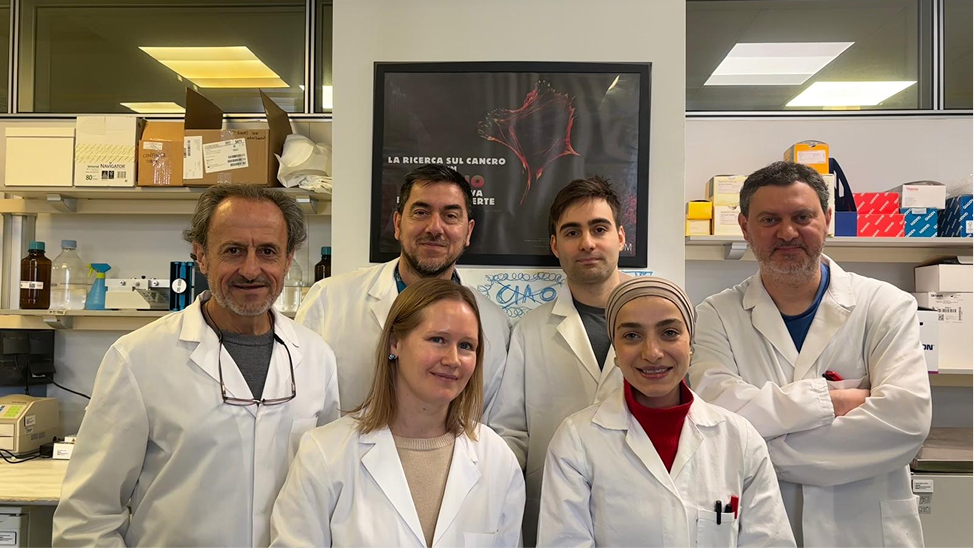
Team members

caption 2

caption 3
1/3 -