


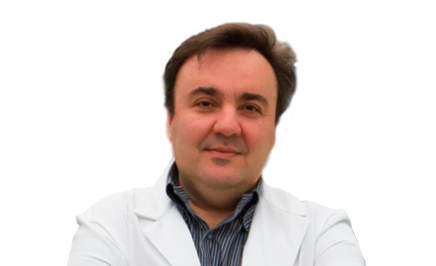
Vincenzo Costanzo
Vincenzo Costanzo is Full Professor of General Pathology at the Department of Oncology and Hemato-Oncology, University of Milan, and Senior Group Leader at IFOM ETS-the AIRC Institute of Molecular Oncology, where he directs the DNA Metabolism research programme.
He obtained his Medical Doctor degree (magna cum laude) from the University of Naples Federico II in 1998, and his PhD in Cellular and Molecular Biology and Pathology in 2003 from the same institution, with training at the Department of Genetics, Columbia University, New York.
In 2004, Costanzo established his independent laboratory at Cancer Research UK’s Clare Hall Laboratories (London Research Institute), one of the world’s leading centres for DNA repair and replication research. At Clare Hall, he worked alongside Nobel laureates Tim Hunt (cell cycle, Nobel 2001) and Tomas Lindahl (DNA repair, Nobel 2015), making seminal discoveries on how the RAD51 protects replicating DNA from degradation. These findings opened an entirely new field in cancer biology. He was awarded tenure as Senior Group Leader in 2010 and held an Honorary Professorship at University College London.
In 2013, he returned to Italy to establish the DNA Metabolism programme at IFOM, where he continues to investigate the fundamental mechanisms linking hereditary cancer predisposition to replication fork instability, with direct implications for improving the diagnosis and treatment of patients with BRCA-associated and DNA repair-deficient cancers.
Affiliation
IFOM ETS- The AIRC Institute of Molecular Oncology, Milan, Italy- Senior Group Leader University of Milan - Department of Oncology and Hemato-Oncology - Full Professor of General Pathology
Former: Cancer Research UK, Clare Hall Laboratories, London Research Institute – Tenured Senior Group Leader (2004-2013)
Former: University College London - Honorary Professor (2004-2013)
Former: Columbia University, New York - Research Scientist (2000-2004)
Research Focus
The research of Prof. Vincenzo Costanzo aims to understand how inherited defects in cancer predisposition genes, particularly BRCA1/BRCA2, RAD51, PALB2, RAD51 paralogs and ATM, compromise the protection of replicating DNA and drive cancer formation, progression, and therapy resistance. His laboratory has made foundational contributions to the discovery that these proteins safeguard nascent DNA at replication forks, revealing a tumour suppressor mechanism that operates during every cell division.
By combining unique biochemical reconstitution and advanced structural imaging, his group identifies the precise molecular events that distinguish normal cells from cancer cells in patients with hereditary breast and ovarian cancer syndrome, Fanconi anaemia, and Ataxia Telangiectasia. This work has direct implications for predicting PARP inhibitor response and overcoming drug resistance, challenges that affect millions of patients and their families worldwide.
Key scientific achievements
Over the past two decades, the Costanzo Laboratory has made major contributions to understanding how cells preserve genome stability during DNA replication and DNA repair. The laboratory’s work has helped define how homologous recombination proteins, including RAD51, BRCA2 and related factors, protect replication forks, suppress single-stranded DNA gaps, and prevent pathological DNA degradation by nucleases such as MRE11.
The laboratory has published several peer-reviewed articles, including work in Molecular Cell, Nature, Nature Cell Biology, Nature Structural & Molecular Biology, Nature Communications and Cell, with more than 5,000 citations. These studies have shaped current models of replication stress, fork protection, DNA gap metabolism, centromere replication, chromatin-based origin regulation, and the response of cancer cells to DNA repair defects.
A central achievement of the laboratory was the discovery that RAD51 protects nascent DNA at stalled replication forks from MRE11-dependent degradation, introducing for the first time the concept that recombination proteins have essential functions beyond double-strand break repair. This work provided a foundation for the modern field of replication fork protection and has major implications for genome instability, cancer development and therapy resistance.
Subsequent work from the laboratory established that BRCA2 and stable RAD51 nucleofilaments prevent pathological degradation of newly synthesized DNA after fork reversal, and showed that fork remodelers such as SMARCAL1 can trigger MRE11-dependent nascent DNA degradation in BRCA2-deficient cells. These findings clarified how defects in homologous recombination create vulnerabilities in cancer cells.
At IFOM, the laboratory reconstituted human centromere-associated chromatin replication and revealed structural features of repetitive centromeric DNA, including looped DNA architectures visualized by electron microscopy. The group also contributed to defining mechanisms of cohesin-mediated chromosome organization and the role of SAMHD1 in controlling MRE11 activity at stalled forks and preventing innate immune activation.
More recently, the laboratory has focused on the biology of single-stranded DNA gaps and endogenous DNA lesions during replication. It showed that POLθ fills replication-associated ssDNA gaps in HR-defective cells, thereby preventing fork breakage and supporting survival of BRCA1-, BRCA2- or RAD51-deficient cancer cells. The group recently discovered that RAD51 directly recognizes and protects abasic sites, revealing a new function of RAD51 and BRCA2 in preventing the accumulation of replication-blocking endogenous DNA lesions.
The laboratory has also uncovered chromatin-based mechanisms controlling DNA replication origin assembly. In particular, it showed that the FACT complex promotes replication origin assembly by evicting histone H1, with consequences for embryonic cell cycles and development. Additional work revealed links between the ATR-dependent replication stress response, zygotic genome activation and mammalian stem cell fate.
Together, these discoveries have positioned the laboratory as a leading contributor to the fields of DNA replication, DNA repair, replication stress, genome instability and cancer biology.
Leadership, mentoring and community impact
The Costanzo Laboratory has trained numerous scientists who have gone on to successful careers in academia, publishing, biotechnology, industry and research management. Former laboratory members now hold positions at institutions and organizations including the University of Tokyo, CNRS, Hunter College CUNY, Cell Press, Heptares, Caribou Biosciences, Boehringer Ingelheim, Cancer Research UK and the University of Cambridge.
The laboratory has also contributed actively to the international scientific community through conference organization, advisory roles and peer review. Vincenzo Costanzo has organized major international meetings on DNA repair, genome stability, cancer and replication stress, including EMBO, EACR, Keystone and Ataxia-Telangiectasia workshops. He has served on review panels and advisory boards for organizations including ERC, AIRC, EACR, CNRS, ANR, CRUK and the Wellcome Trust, and has reviewed for leading journals including Cell, Molecular Cell, Science, Nature, Nature Communications, Nature Cell Biology, Nature Structural & Molecular Biology, EMBO Journal, MCB and JCB.
Scientific Productivity
Vincenzo Costanzo has authored more than 75 peer-reviewed publications, with over 5,000 total citations. He has served as senior or corresponding author on 34 papers and first author on 10. Key publications have appeared in Nature, Cell, Nature Structural & Molecular Biology, Nature Cell Biology, Nature Communications, Molecular Cell, and EMBO Journal. He has been invited speaker at more than 70 international conferences.
Vincenzo Costanzo’s milestones
-
2024
- EMBO Membership
- RAD51 protects abasic sites
-
2023
Full Professor, University of Milan
-
2022
POLθ fills replication-associated ssDNA gaps
-
2018
Associate Professor, University of Milan
-
2017
BRCA2/RAD51 and fork reversal
-
2016
Reconstitution of human centromere replication
-
2014
Harvard-Armenise Career Development Award
-
2013
ERC Consolidator Grant
-
2010
- Tenure at Clare Hall Laboratories
- Replication fork protection by RAD51
-
2007
- ERC Starting Grant
- EMBO Young Investigator Programme
-
2006
Lister Institute Prize
-
2004-2013
Clare Hall Laboratories, London Research Institute
-
2004
Cancer Research UK Faculty Grant
-
2000-2004
Columbia University, New York